
More than 8.5 million Americans aged 60 and older live alone. That’s nearly 27% of the senior population — and if you’re one of them, or if you have a parent in that situation, you already know the quiet worry that comes with it. What happens if there’s a fall? What if there’s a medical emergency in the middle of the night with no one nearby? The right personal safety devices for seniors can make all the difference — and in 2026, the options have never been better or more affordable.
As a registered nurse, I’ve had this conversation with patients and families hundreds of times. The good news is that in 2026, the technology available to help seniors live safely and independently has never been better — or more affordable. You don’t have to choose between safety and independence. You can have both.
This guide walks you through the best personal safety devices for seniors living alone, organized by category so you can find exactly what fits your situation.
Why Safety Devices Matter More Than Ever
Falls are the number one cause of injury — both fatal and nonfatal — among older adults in the United States. One in four seniors experiences a fall every year. But falls aren’t the only concern. Medical emergencies, home security threats, medication errors, and simple isolation can all put seniors at risk.
The devices in this guide address all of those concerns. Some are high-tech. Some are refreshingly simple. All of them are worth knowing about because personal safety devices for seniors have become essential tools, not luxuries
Personal Emergency Response Devices
This is where I always start with patients and families, because it’s the foundation of everything else. A personal emergency response device gives a senior the ability to call for help instantly — regardless of where their phone is. Here are the options I recommend.
Silent Beacon 2.0 — My Top Pick for Active Seniors
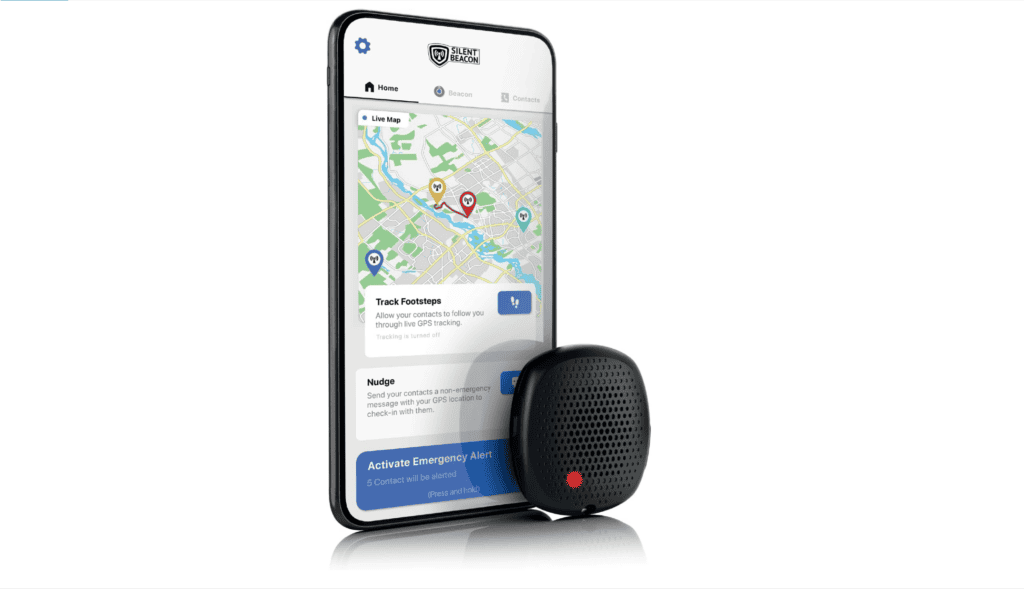
If there’s one device I’d put in the hands of every independent senior right now, it’s the Silent Beacon 2.0. I’ve written a full comparison of Silent Beacon vs. Life Alert elsewhere on this site, but here’s the short version:
This small, wearable Bluetooth device pairs with a free smartphone app and lets you call 911 — or any number you choose — with a single button press. At the same time, it sends your real-time GPS location to your designated emergency contacts via text, email, and push notification. It has a built-in speaker and microphone for hands-free two-way communication, a 42-day battery life, and five different alert modes including a discreet silent mode.
The price point is what sets it apart from traditional medical alert systems: there’s no required monthly subscription. You buy the device once (around $50–$60) and the core features are yours. No contract. No monthly bill. No salesperson calling you.
Best for: Active, independent seniors who use a smartphone and want maximum features at minimum cost.
Medical Guardian MGHome Cellular
For seniors who spend most of their time at home and want professional 24/7 monitoring, Medical Guardian is consistently one of the highest-rated options on the market. Their MGHome Cellular system includes a base station, a wearable call button, and optional fall detection. When you press the button, you’re connected directly to a trained U.S.-based operator who can dispatch help immediately.
Monthly fees start around $37.95, which is significantly more affordable than Life Alert, and there’s no lengthy contract required. The caregiver app lets family members stay connected from anywhere.
Best for: Seniors who want professional monitoring and primarily stay at home.
Bay Alarm Medical
Bay Alarm Medical is a consistent favorite among senior safety reviewers for one simple reason: it offers solid, reliable protection at a price that doesn’t punish people on fixed incomes. Plans start around $19.95 per month, there’s no long-term contract, and they offer both in-home and mobile GPS options. Their customer service is frequently praised as well — which matters enormously when the person using the device may need help setting it up.
Best for: Budget-conscious seniors or families looking for traditional monitoring without the Life Alert price tag.
MobileHelp vs. the Competition
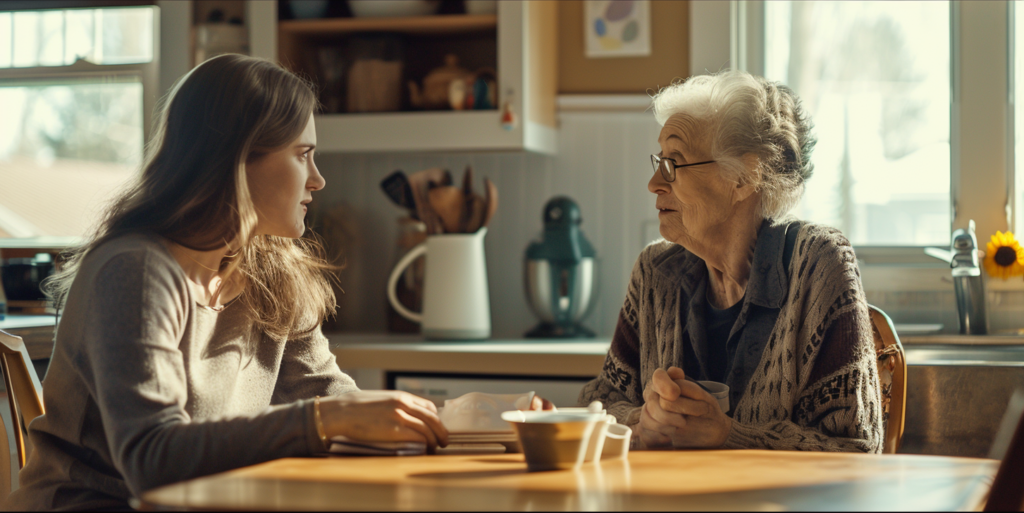
I get asked about MobileHelp a lot, so let me address it directly. MobileHelp is a legitimate medical alert company with solid reviews — their devices work on AT&T’s cellular network, they offer both in-home and on-the-go options, and their fall detection add-on is reliable. Plans typically start around $19.95–$24.95 per month depending on the configuration.
Where they land in my rankings: comparable to Bay Alarm Medical in price and features, slightly behind Medical Guardian in monitoring reputation, and significantly more expensive long-term than the Silent Beacon 2.0 if you’re comfortable managing your own emergency contacts without a professional dispatch center. MobileHelp is a good choice — it’s just not the best choice for every situation, and the monthly fees add up fast over a year or two.
Best for: Seniors who want cellular-based professional monitoring and like the flexibility of no long-term contract.
Fall Detection Smartwatches
Standard medical alert buttons require you to press them when something goes wrong. But what if a fall renders you unable to press anything? That’s where fall detection smartwatches come in — they detect sudden impacts automatically and can trigger an alert even if you’re unconscious or disoriented.
Apple Watch (Series 9 or later)
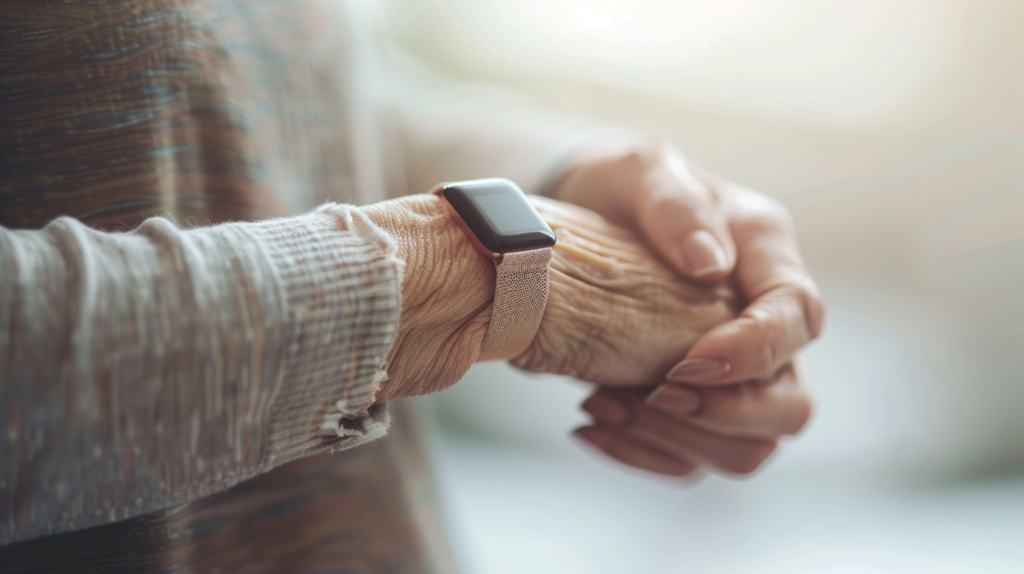
The Apple Watch has become a legitimate safety device for seniors who are comfortable with technology. It uses motion sensors to detect hard falls and, if you don’t respond within 60 seconds, automatically calls emergency services and sends your location to your emergency contacts — all without you having to press a thing. It also tracks heart rate, blood oxygen, and irregular heart rhythm, which adds a meaningful layer of health monitoring.
The upfront cost is higher than dedicated medical alert devices, but there’s no monthly fee for the emergency SOS features themselves.
Best for: Tech-comfortable seniors who want health tracking and safety monitoring in one device.
Bay Alarm Medical SOS Smartwatch
For seniors who want fall detection in a watch format but find the Apple Watch too complicated, Bay Alarm Medical’s SOS Smartwatch is a dedicated medical alert watch that’s simpler to navigate. It includes GPS, fall detection, and two-way communication, and connects to Bay Alarm’s 24/7 monitoring center.
Best for: Seniors who want a dedicated safety watch without the learning curve of a full smartwatch.
Smart Home Devices That Add a Safety Layer
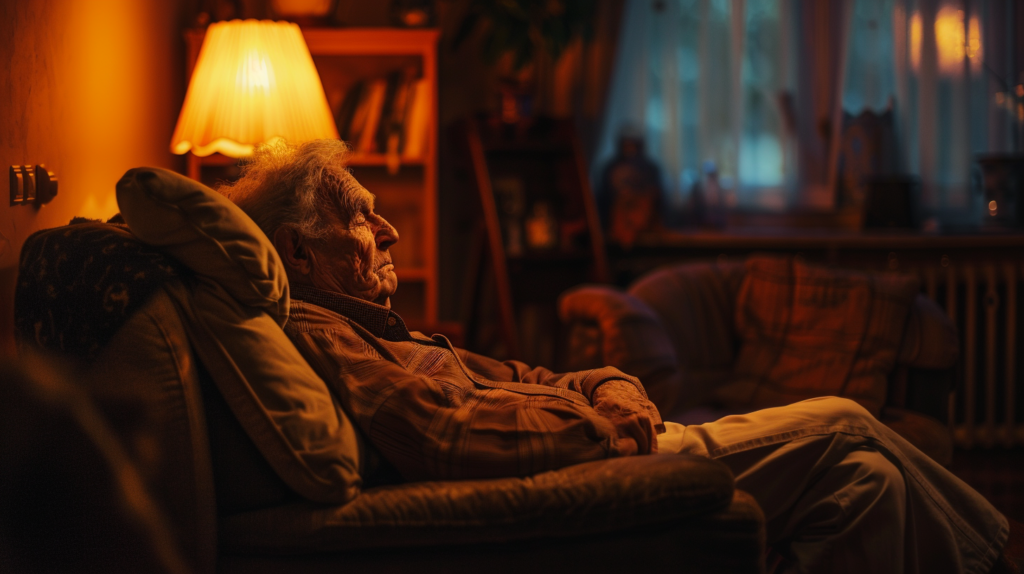
Personal alert devices address emergencies after they happen. Smart home technology can help prevent them — and make daily life safer and easier.
Amazon Echo Show (Smart Display)
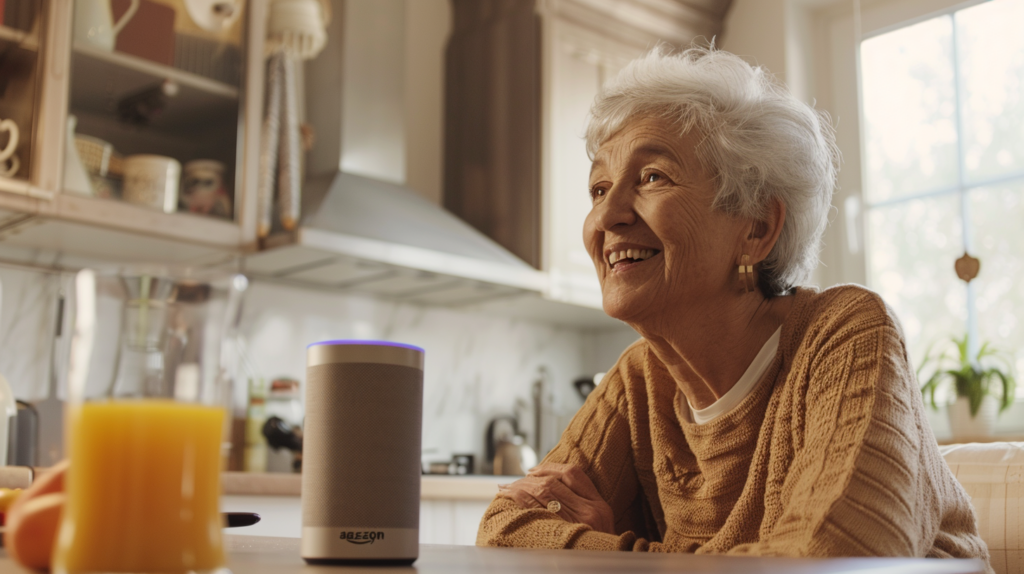
The Echo Show is more than a speaker. It allows seniors to make video calls to family with a simple voice command, set medication reminders, control smart lights and locks, and ask Alexa for help at any moment. For seniors living alone, the social connection aspect is genuinely valuable — isolation is one of the most underappreciated health risks for older adults.
It won’t replace a medical alert system, but it’s an excellent companion device that adds both safety and quality of life.
Best for: Seniors who want voice-activated convenience and better connection with family.
Video Doorbell Camera
A video doorbell lets seniors see and speak to whoever is at their door without opening it — or even getting up. This is particularly valuable for mobility-limited seniors and for protecting against doorstep scams, which are unfortunately common. Most current models include night vision, motion detection, and smartphone alerts.
Best for: Any senior living alone who wants to feel more secure about who’s at their door.
Automatic Stove Shut-Off Device
Kitchen fires are one of the leading causes of home injuries for older adults, and they often start because a burner was left on after cooking. Automatic stove shut-off devices use timers to cut power to the stove after a set period — a simple, inexpensive intervention that can prevent a catastrophe.
This is especially worth considering for seniors with early memory concerns.
Best for: Seniors who cook regularly, particularly those with mild cognitive changes.
Low-Tech Essentials That Save Lives
Not everything has to be connected to Wi-Fi to be effective. Some of the most impactful senior safety tools are decidedly old-fashioned.
Grab Bars in the Bathroom
The bathroom is where most home falls happen. A properly installed grab bar near the toilet and inside the shower or tub can prevent falls before they happen. These are inexpensive, widely available, and installation is straightforward. If you’re not comfortable installing one yourself, a handyman can do it in under an hour.
I cannot stress this enough — a well-placed grab bar is one of the highest-return safety investments a senior can make.
Personal Alarm Keychain
For seniors who go out in public alone — walks in the neighborhood, trips to the store — a personal alarm keychain is a simple layer of protection. Pull the pin and it emits a 120-decibel siren that can startle an attacker, alert nearby people to a fall or medical emergency, and draw attention when needed. They cost less than $15 and fit in a pocket or purse.
Bed Rail
Nighttime falls — particularly when getting out of bed — are surprisingly common among older adults. A bed rail provides a stable handhold and can make an enormous difference for seniors who feel unsteady when rising, especially if they take medications that cause dizziness.
How to Choose the Right Device
Every senior’s situation is different. When comparing personal safety devices for seniors, prioritize battery life and ease of use. Here’s a simple way to think about it:
If your primary concern is emergencies while at home: A medical alert system like Medical Guardian or Bay Alarm Medical, combined with bathroom grab bars, covers the most important bases.
If your parent is active and goes out regularly: The Silent Beacon 2.0 is the most versatile and affordable option, offering protection both at home and on the go with no monthly fees.
If cognitive decline is a concern: Automatic fall detection (Apple Watch or a dedicated fall detection system) paired with a stove shut-off device and a video doorbell creates meaningful protection even when judgment is impaired.
If budget is the primary concern: A Silent Beacon 2.0 and a $15 personal alarm keychain together provide solid, no-contract emergency coverage for under $75 total.
A Note From a Nurse
After decades in healthcare, I’ve seen what happens when people wait too long to address safety. A fall that might have been a minor inconvenience with the right equipment becomes a hip fracture. A medical emergency that could have been resolved quickly turns serious because help arrived too late.
As a nurse, recommending personal safety devices for seniors is something I do regularly — and I’ve never once had a patient tell me they wished they’d waited longer to get one.
The devices in this guide aren’t about giving up independence. They’re about protecting it. The goal is to make sure a senior can keep living on their own terms — safely, confidently, and for as long as possible.
Start with one device. Add more as needs evolve. And don’t wait for something to go wrong before you act.
Disclaimer: This article is for informational purposes only and does not constitute medical advice. Always consult with a qualified healthcare provider about the best safety solutions for your specific situation. The Senior Living Report may earn a commission on qualifying purchases made through affiliate links on this page.
