
If you’re searching for a personal safety device for yourself or an aging parent, you’ve probably already compared Silent Beacon vs Life Alert. Life Alert has been around since 1987, and that famous “I’ve fallen and I can’t get up” commercial is burned into our cultural memory. But familiarity isn’t the same as value — and in 2026, there’s a newer option that I believe is a far better fit for most seniors: the **Silent Beacon 2.0**.
As a registered nurse, I’ve spent decades thinking about patient safety. When I came across the Silent Beacon 2.0, I’ll be honest — I was surprised. This small, wearable device does things that traditional medical alert systems can’t, and it does them without locking you into a punishing contract. Let me break it all down for you.
What Is the Silent Beacon 2.0?
The Silent Beacon 2.0 is a wearable, Bluetooth-enabled panic button that pairs with a free smartphone app. With a single press, it can call 911 or any phone number you choose, while simultaneously sending your real-time GPS location to your designated emergency contacts via text, email, and push notification. It has a built-in speaker and microphone, so you can communicate hands-free without ever touching your phone.
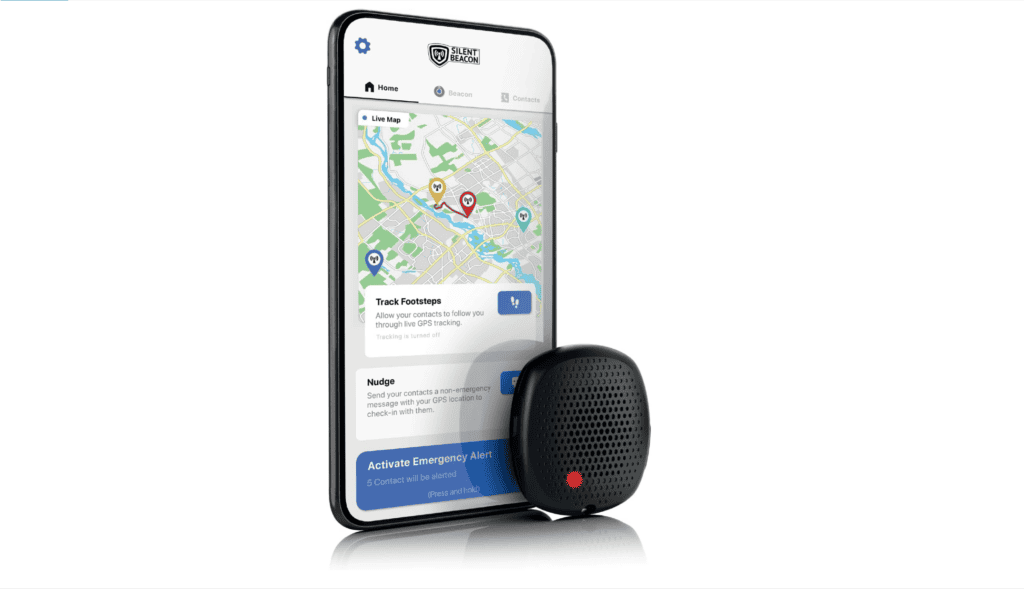
It weighs almost nothing, fits on a wristband or clips to clothing, and has a battery life of up to 42 days on a single charge. For seniors who already forget to charge their phones, that kind of staying power matters enormously.
What Is Life Alert?
Life Alert is one of the oldest and most recognized medical alert companies in the United States. Their system centers on a wearable help button that connects to a 24/7 professional monitoring center. When pressed, a trained agent contacts emergency services or a family member on your behalf.
It works. I won’t pretend it doesn’t. But the cost structure and contract terms are where things get uncomfortable.

The Cost Comparison: This Is Where It Gets Real
This is the number that will matter most to seniors on a fixed income — or to adult children helping to budget for an aging parent.
Life Alert monthly fees currently range from $49.95 to $89.95 per month, plus a one-time installation fee of around $197. Here’s the part that doesn’t get talked about enough: Life Alert typically requires a three-year contract. Over that period, you could easily pay $3,000 or more for their service. And if your situation changes — a move to assisted living, a hospitalization, even a death in the family — canceling early is notoriously difficult.
Silent Beacon 2.0, by contrast, has a one-time device cost with no required monthly subscription for its core features. The device retails for around $50–$60 on Amazon and their website. There is an optional 24/7 professional monitoring add-on if you want that layer of coverage, but it’s not required. For the vast majority of seniors and their families, the free app-based features are more than sufficient.
Let Silent Beacon vs Life Alert sink in: a three-year Life Alert commitment could cost $3,000. A Silent Beacon 2.0 costs about as much as a nice dinner out — and it’s yours to keep.
Feature-by-Feature Comparison
| Feature | Silent Beacon 2.0 | Life Alert |
|---|---|---|
| Monthly Fee | None required (optional monitoring available) | $49.95–$89.95/month |
| Contract Required | No | 3-year contract |
| One-Time Cost | ~$50–$60 | ~$197 installation fee |
| Calls 911 Directly | Yes | Yes (via monitoring center) |
| GPS Location Sharing | Yes, real-time | Yes (mobile unit only) |
| Two-Way Communication | Yes, built-in speaker & mic | Yes |
| Battery Life | 42 days standby | Varies by device |
| Wearable | Yes (wristband or clip) | Yes (pendant or wristband) |
| Smartphone App | Yes (free) | Limited |
| No Monthly Fee Option | Yes | No |
| Fall Detection | No | No |
| Water Resistant | Yes (IPX4) | Yes |
What Silent Beacon Does That Life Alert Can’t
Here’s what genuinely impressed me as a clinician:
Multiple alert modes. Silent Beacon isn’t just an emergency button. It has five distinct alert modes:
- Emergency Alert – Calls your contact or 911 and sends your GPS location simultaneously
- Silent Mode – Sends a discreet alert with no sound, ideal for situations where you don’t want to alarm people nearby
- Check-In – Sends a simple “I’m safe” message with your location to loved ones
- Footsteps – Shares your real-time location continuously, so family knows you’re out on a walk and can track your route
- Beacon-to-Beacon – Alerts other Silent Beacon users in your contact list directly
For a senior who lives alone or has a family member with early-stage memory concerns, the Footsteps and Check-In modes are genuinely powerful tools that go far beyond what a traditional medical alert button offers.
No middleman. With Life Alert, your button press goes to a monitoring center, which then contacts emergency services. With Silent Beacon, your press connects directly to 911 — or whoever you’ve designated. In an emergency, every second matters.
42-day battery life. I can’t overstate how important this is for older adults. Complicated charging routines are a real barrier to consistent use. If your loved one’s device dies because they forgot to charge it, the whole system fails. 42 days of standby eliminates that problem.
What Life Alert Does Better
In the spirit of being fair and honest — because that’s what you deserve — there are areas where Life Alert has the edge:
Professional monitoring. Life Alert’s 24/7 monitoring center means a trained human being is on the line when the button is pressed. For seniors with significant cognitive decline or those who may panic in an emergency and not be able to speak clearly to 911, that human intermediary can be valuable.
No smartphone required (for basic in-home use). Life Alert’s in-home base unit doesn’t need a paired smartphone to function. Silent Beacon requires a connected smartphone via Bluetooth, which can be a barrier for seniors who don’t use smartphones or have family members who aren’t nearby to help set it up.
Established track record. Nearly 40 years in business means Life Alert has deep relationships with emergency services and a well-tested infrastructure.

Who Should Choose Silent Beacon 2.0?
In my clinical opinion, Silent Beacon 2.0 is the right choice for:
- Seniors who are active and living independently at home or in the community
- Adults who want no monthly fees or contract obligations
- Families on a fixed income or budget who still want real peace of mind
- Seniors who already own and use a smartphone — or have a family member who helps manage one
- Anyone who wants GPS location sharing and two-way communication in one affordable device
- Caregivers or adult children who want to stay connected without intrusive monitoring
Who Might Still Prefer Life Alert?
- Seniors with significant cognitive decline who need a professional intermediary to interpret emergencies
- Those who do not use smartphones and have no nearby support to set one up
- Individuals who find comfort in a brand name with decades of recognition
- Seniors whose primary concern is in-home monitoring only, rather than mobile coverage

My Bottom Line
I spent years as a nurse watching patients and families navigate the healthcare system. One thing I know for certain: the best safety device is the one that actually gets used. A complicated system, an unaffordable monthly bill, or a device with a dead battery doesn’t protect anyone.
The Silent Beacon 2.0 is affordable, easy to use, feature-rich, and doesn’t punish you with a three-year contract. For the majority of independent seniors and their families, it is the smarter, more modern choice.
Life Alert built its reputation on a great marketing slogan. Silent Beacon is building its reputation on a great product.
Disclaimer: This article is for informational purposes only and does not constitute medical advice. Always consult with a qualified healthcare provider about the best safety solutions for your specific situation. The Senior Living Report may earn a commission on purchases made through affiliate links on this page.
