
Aging is inevitable. Aging well is a choice — and it’s one that more people are making every day. As a nurse, I’ve watched patients in their seventies and eighties run circles around people half their age, not because they were lucky, but because they made consistent, intentional decisions about how they lived. I’ve also watched people surrender to aging far earlier than they needed to, accepting decline as something that simply happens to you.
It doesn’t have to be that way.
The science of healthy aging has evolved dramatically in recent years. Researchers now distinguish between lifespan — how long you live — and healthspan — how well you live those years.1 The goal isn’t just to add years to your life. It’s to add life to your years. And the good news is that the most powerful tools for doing that are available to almost everyone, starting today.
This guide covers what the evidence actually shows about aging well: what works, what matters most, and what you can realistically do regardless of where you’re starting from. Learning how to age well starts with understanding that small, consistent choices matter more than dramatic interventions.
Move Your Body: The Foundation of How to Age Well
If there is one non-negotiable foundation of aging well, it’s physical movement. The research on this is about as solid as it gets in medicine. Regular physical activity helps preserve muscle mass, supports cardiovascular health, improves balance, sharpens cognition, and reduces the risk of falls — one of the most serious threats to independence in older adults.2
The CDC recommends at least 150 minutes of moderate-intensity aerobic activity per week for older adults, along with muscle-strengthening activities on two or more days.3 That sounds like a lot until you break it down: a 30-minute walk five days a week gets you there. A swim. A bike ride. A water aerobics class. Movement doesn’t have to be intense to be effective — it just has to be consistent.
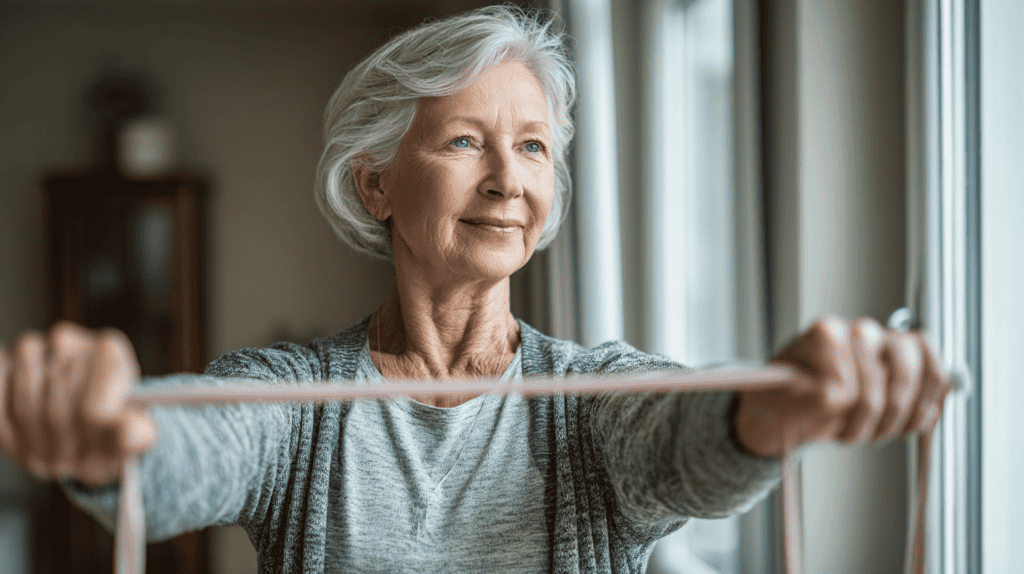
Strength training deserves special attention. As we age, we naturally lose muscle mass in a process called sarcopenia. After age 30, most people lose three to five percent of their muscle mass per decade, and the rate accelerates after 60.4 Strength training — even light resistance work with bands or body weight — can slow and partially reverse this process. It also protects your joints, improves your balance, and makes daily tasks like carrying groceries and climbing stairs significantly easier.
Balance work is the third piece people most often skip. Falls are the leading cause of injury-related death among older adults in the United States.5 Simple balance exercises — standing on one foot, heel-to-toe walking, tai chi — can meaningfully reduce your fall risk. I’d put balance training in the same category as smoke detectors: you don’t appreciate it until you really need it.
Start where you are. If you haven’t been active, a ten-minute walk is a legitimate starting point. The body responds to movement at any age. Movement is non-negotiable when it comes to how to age well.
Eat to Support the Body You Want – How to age well at 80
Nutrition in later life isn’t about dieting. It’s about giving your body what it needs to maintain muscle, protect your bones, support your brain, and keep your energy up. What you eat is one of the most direct ways to influence how well you age. A few principles matter more than the rest.
Protein intake is one of the most under-discussed issues in older adult nutrition. Research consistently shows that older adults need more protein per pound of body weight than younger adults to maintain muscle mass — roughly 1.0 to 1.2 grams per kilogram of body weight per day, which is higher than the standard recommended daily allowance.6 Good sources include eggs, fish, poultry, legumes, dairy, and lean meats. If you’ve noticed that you feel weaker than you used to, your protein intake is one of the first things worth examining.
Calcium and vitamin D remain essential for bone health. Osteoporosis affects approximately 10 million Americans over 50, and low bone density affects millions more.7 Dairy products, fortified foods, leafy greens, and sardines are good dietary sources of calcium. Vitamin D is harder to get from food alone, and many older adults — especially those in northern climates — are deficient. Talk to your doctor about whether supplementation makes sense for you.
Hydration is quietly critical and consistently underestimated. Older adults experience a blunted sense of thirst, which means you can become dehydrated before you feel thirsty. Dehydration contributes to confusion, falls, urinary tract infections, and kidney problems. Aim for water as your primary beverage and make a habit of drinking regularly throughout the day regardless of thirst.
Beyond those specifics, the broader pattern that research supports on how to age well is familiar: plenty of vegetables and fruits, whole grains, healthy fats, and lean proteins. The Mediterranean diet pattern has among the strongest evidence for supporting brain health and longevity in older adults.8
Protect Your Brain Like It’s Your Most Valuable Asset
Cognitive decline is one of the things people fear most about aging. The good news is that your brain has far more capacity for adaptation and resilience than we once believed — and there’s a great deal you can do to protect it.
Staying mentally active matters. Learning new things, whether a language, an instrument, a craft, or a skill you’ve always been curious about, challenges your brain in ways that familiar activities don’t. The key word is new. Your brain benefits most from novel challenges, not just repetition of things you already know well.
Social connection is one of the most powerful and least-discussed factors in brain health. Loneliness and social isolation have been linked to significantly increased risk of dementia, depression, and early death.9 As a nurse, I’ve seen this play out again and again: patients who maintain strong social ties almost always do better — physically and cognitively — than those who are isolated. Staying connected isn’t just good for your mood. It’s a legitimate health strategy.
Sleep is another pillar that gets overlooked. During sleep, the brain clears waste products — including proteins associated with Alzheimer’s disease — through a system called the glymphatic system.10 Chronic poor sleep is associated with accelerated cognitive decline. Most older adults need seven to eight hours per night. If you’re struggling with sleep quality, it’s worth talking to your doctor rather than simply accepting it as part of aging.
Manage your stress. Chronic stress elevates cortisol, which over time damages the hippocampus — the part of the brain most involved in memory. Mindfulness, meditation, time in nature, prayer, creative pursuits, and physical activity are all evidence-supported ways to regulate stress. You don’t need to become a meditator overnight. Even ten minutes of intentional quiet each day is a meaningful start. Protecting cognitive function is central to aging well on every level.
Tend to Your Emotional Health With the Same Seriousness as Your Physical Health
Mental health conditions — particularly depression and anxiety — are common in older adults and are routinely underdiagnosed and undertreated. In part that’s because older adults are less likely to seek help, and in part because symptoms can look different in later life. Fatigue, memory problems, and social withdrawal are sometimes incorrectly attributed to aging when they’re actually signs of treatable depression.
If you or someone you love has noticed a persistent change in mood, loss of interest in things that used to bring pleasure, or increasing withdrawal from social activities, that’s worth taking seriously and discussing with a healthcare provider.
Beyond clinical conditions, emotional well-being in later life is heavily influenced by two things: purpose and connection. Research on what makes older adults report high life satisfaction consistently points to the same factors — meaningful relationships, a sense of contribution, and activities that feel purposeful.11 Volunteering, mentoring, creative pursuits, caregiving, and community involvement all support this. Retirement doesn’t have to mean withdrawal from meaningful engagement. For many people, it’s an opportunity to redirect energy toward what matters most.
Resilience — the ability to adapt to change and loss — is also something that can be deliberately cultivated. Aging involves real losses: of roles, relationships, physical capacities, and sometimes independence. The people I’ve seen navigate those losses best aren’t the ones who never struggled. They’re the ones who gave themselves permission to grieve while also remaining oriented toward what was still possible. Emotional resilience is just as important to aging well as anything you do physically.
Stay on Top of Your Healthcare — Proactively
Preventive healthcare is one of the highest-return investments you can make in later life. Catching problems early — whether that’s high blood pressure, elevated blood sugar, early cancer, or declining bone density — consistently leads to better outcomes than waiting until symptoms appear.
As a nurse, one thing I wish more patients understood is this: don’t wait until something is wrong to see your doctor. Regular checkups, appropriate screenings, and keeping your vaccinations current are not just good habits — they’re genuinely life-extending practices. Flu, pneumonia, shingles, and COVID-19 vaccines are particularly important for older adults, who face greater risk from these infections.12
Medication management is another area worth active attention. Many older adults take multiple medications, and the risk of interactions, side effects, and dosing issues increases with each additional drug. A pharmacist review of your medications — called a medication reconciliation — is something you can request and is often eye-opening.
Know your numbers: blood pressure, blood glucose, cholesterol, and bone density. These are the leading indicators of the conditions most likely to affect your quality of life in later years. If you know where you stand, you can act. If you don’t, you can’t.
Plan Ahead — Not Because It’s Grim, But Because It’s Freeing
One of the most loving things you can do for yourself and your family is to make your wishes known before a crisis forces the issue. Planning ahead is one of the most underrated aspects of how to age well with dignity and independence. I’ve sat with too many families in hospital waiting rooms trying to make impossible decisions because no one had ever talked about what their loved one would want. Those conversations are hard enough under normal circumstances. They’re devastating under pressure.
Advance care planning — creating a living will, designating a healthcare proxy, and having honest conversations with your family about your values and preferences — doesn’t accelerate death. It protects your autonomy. It ensures that if you can’t speak for yourself, someone who knows your wishes can speak for you.
Financial planning is equally important. Understanding your Medicare coverage, planning for potential long-term care costs, and having a clear sense of your income and expenses in retirement reduces stress and improves outcomes. A consultation with a financial advisor who specializes in retirement planning is worth the investment.
Legal basics — a valid will, designated beneficiaries on your accounts, and a durable power of attorney — are the foundation. If these aren’t in place, making time to address them is one of the most practical things you can do for your peace of mind and your family’s future.
The Bottom Line on How to Age Well
There is no secret to aging well. There’s no supplement that replaces movement, no shortcut around sleep, no substitute for meaningful connection. What the evidence consistently shows is that the fundamentals — moving regularly, eating well, staying socially engaged, protecting your brain, tending to your emotional health, and staying proactive about your medical care — work. They work at 60, at 70, and at 85.
The best time to start was twenty years ago. The second-best time is today.
As a nurse, I’ve watched people make remarkable changes well into later life and experience real improvements in how they feel and function. The body is more adaptable than most people give it credit for. So is the mind. The question isn’t whether it’s too late. The question is what you’re going to do next.
References
- World Health Organization. (2024). Ageing and health. Retrieved from who.int
- National Institute on Aging. (2023). Exercise and physical activity: Your everyday guide. Retrieved from nia.nih.gov
- Centers for Disease Control and Prevention. (2024). Physical activity guidelines for older adults. Retrieved from cdc.gov
- Harvard Health Publishing. (2023). Preserve your muscle mass. Retrieved from health.harvard.edu
- Centers for Disease Control and Prevention. (2024). Falls prevention facts. Retrieved from cdc.gov
- Bauer, J., et al. (2013). Evidence-based recommendations for optimal dietary protein intake in older people. Journal of the American Medical Directors Association. Retrieved from jamda.com
- National Osteoporosis Foundation. (2024). Osteoporosis fast facts. Retrieved from bonehealthandosteoporosis.org
- Martínez-González, M.A., et al. (2022). Mediterranean diet and cognitive health. New England Journal of Medicine. Retrieved from nejm.org
- National Academies of Sciences, Engineering, and Medicine. (2020). Social isolation and loneliness in older adults. Retrieved from nationalacademies.org
- Xie, L., et al. (2013). Sleep drives metabolite clearance from the adult brain. Science. Retrieved from science.org
- Ryff, C.D. (2014). Psychological well-being revisited: Advances in the science and practice of eudaimonia. Psychotherapy and Psychosomatics. Retrieved from karger.com
- Centers for Disease Control and Prevention. (2024). Vaccines for older adults. Retrieved from cdc.gov
